
ERROR: Invalid password reset link.
Our new name

Le parole Sublime Italian Artisans non hanno significato in inglese, perciò abbiamo introdotto SubLIME Italian Artisans. Siamo sempre noi, sempre appassionati e attenti ai materiali naturali, alla calce, LIME in inglese. Ci prepariamo ai nostri committenti stranieri, il sito è in inglese perciò digitate sublimeitalianartisans.com arrivate sempre qui al brand iniziale Sublime Italian Artisans. Una scelta dovuta ai nuovi orizzonti, forza e avanti tutta!
We understand our Italian name Sublime Italian Artisans has no meaning in English. So we are introducing SubLIME Italian Artisans. It’s always us, always passionate and attentive to natural materials, precisely LIME in English. We are preparing for our foreign clients. The website is in English so if you type sublimeitalianartisans.com you will always arrive here at the initial brand Sublime Italian Artisans. A choice due to new horizons, strength and full speed ahead!
Maltina di calce
La maltina di calce è composta da grassello di calce, polvere di marmo, pigmenti naturali e tanto olio di gomito.E’ una nostra creazione, viene preparata appositamente perchè si deve adattare al muro che ti trovi a dover rivestire. E’ magnifica nei bagni dove non si vogliono mettere le piastrelle. Anche nell’interno doccia rimane completamente impermeabile. Si lava con detersivi neutri, dura nel tempo e lascia respirare i muri. E’ completamente naturale, una via di mezzo tra il tonachino e il marmorino.

Sublime Italian Artisans incontra Biodry
Ci siamo incontrati al Salone del Restauro di Firenze 4 anni fa. Ci siamo subito capiti tecnicamente, abbiamo la stessa visione consolidatasi più che mai in questi anni. Rimuovere dati falsi acquisiti ponendo soluzioni corrette sui problemi di umidità e sugli intonaci a cemento.

La nostra può essere una sinergia di intenti: dare una soluzione definitiva a chi si trova a dover affrontare problemi di umidità. Ciascuno, nel suo campo, porta la propria soluzione, di fatto possiamo essere complementari.

Biodry si propone di rimuovere la causa dell’umidità, Sublime Italian Artisans consolida il risultato facendo respirare i muri. Dice Chiara Minoli, che ha ideato l’apparecchio decorato in foto: “Se sei bagnato e ti metti addosso un cappotto rimarrai sempre bagnato, se ti asciughi e ti metti un cappotto resterai sempre asciutto”.

Una volta installato il sistema, si consiglia di posare intonaci a calce. Loro asciugano, noi mettiamo il cappotto. Auguri allora alla nostra comune passione.

Manutenzione dei castelli…(parte prima)
“Peccato che uno stato di generale trascuratezza offuschi tanta bellezza”.

Sentiamo spesso questa frase quando visitiamo un castello o un edificio storico.
Fare manutenzione era una prassi normale nel passato. Ogni anno si usava dare la cera d’api e olii vegetali ai pavimenti di cotto, ai seminati, ai legni di casa, porte, finestre, travi. Si usava rappezzare con malte di calce le effluorescenze degli intonaci delle facciate, decorare con tinteggiature di grassello di calce quelle stanze che necessitavano di una pulizia dalle infiltrazioni di umidità. Si usavano materiali naturali, derivati dalle lavorazioni nelle cascine intorno, dalle cave vicine, tutti avevano le buche dove si spegneva la calce, per fare le malte per la manutenzione. Il costo era rappresentato prevalentemente dalla forza lavoro. Spesso, erano i contadini stessi con il capomastro, che nei tempi morti autunnali, aiutavano in casa.
Oggi fare manutenzione è diventato un affare complicato e soprattutto costosissimo.
I capomastri sono ormai rarissimi, i materiali vengono consigliati dai proprietari dei magazzini edili che, non sempre, sono sufficientemente preparati nel consigliare le forniture di materiali da restauro e non conoscono i sacchi di intonaco di calce vera.
I proprietari di castelli e case storiche dunque, si devono districare tra: informazioni recuperate sul web, memorie tramandate in famiglia, materiali costosi assai più del dovuto, solo perchè di “bio-edilizia”. Ho visto latte di calce costare 60-70 euro, quando un sacco di grassello, il cosiddetto “maialino” che trovate dappertutto, costa tra i 3 e i 5 euro.  I problemi sono che occorre saper usare il grassello di calce, di solito abbiamo dimenticato “come si faceva una volta” e non siamo disponibili ad aspettare i tempi rallentati della calce, e che occorre trovare le maestranze capaci di lavorare la calce. Si può fare manutenzione intelligente. Se usiamo i materiali naturali, la calce in particolare, non serve rifare dopo 2/3 anni lo stesso lavoro. Cos’è questa novità che bisogna rifare le facciate ogni 4/5 anni? Le facciate a calce durano 100 anni e più, come succedeva fino agli anni ’50 quando il mercato dell’edilizia è stato stravolto dalle industrie chimiche….
 Di questi e di altri temi, abbiamo parlato nell’incontro col barone Ivan Drogo Inglese, in una MIlano di fine settembre, ancora rovente. La passione per i castelli e gli edifici storici ci accomuna. Grande lavoro, sta facendo il barone con Assocastelli, nell’aprire i tanti castelli italiani e nel sostenere i loro proprietari per far conoscere e condividere, con noi tutti, gioie e dolori di questi giganti di bellezza. Grande lavoro, stiamo facendo noi di Sublime Italian Artisans, per informare e dare la direzione migliore, a tutti coloro i quali sono interessati ad una manutenzione intelligente, in particolare ai proprietari e agli artigiani….(seconda parte a seguire)
.
[TheChamp-Sharing title=”Sentiti libero di condividere questo…”]
.
Published on Kermes: Artisan’s tradition and restoration
 The true life of artisans-restorers and ancient restoration techniques: a heritage to be maintained and re-evaluated.
The number 100 of the magazine Kermes, relaunched by the new publisher Lexis srl, publishes, among others, this article of mine on the artisans. The article is the result of the precious will of the publisher in giving voice to this very important category.
I still have in mind a poem on the the subsidiary ofrom the primary school, showing a drawing of the dirty hands of a craftsma,n who had only those, to offer to the Lord at his death. It struck me forever, remaining a reference that still has its meaning, whereby today, more and more often, the artisans restorers appear in “white coat” using sophisticated new technologies …”4.0 artisans”.
The love for art and beauty led me to the world of restoration where I met the artisans I work with today. Mine is an experience in the field, in direct contact with the category, which represent a large part of the national manufacturing tradition.
We have worked on marvelous goods, I have met men and women full of passion, dedication and culture, who were unfortunally still struggling to get to the end of the month. I met very good restorers, as an example an exceptional gilder who was left without work because not well inserted politically.
I am vaccinated, I have learned how the world goes, but I think each and every single enthusiast creates a conscious people, so I will do my part as much as I can.
In our country, the artisan in restoration, is an historically important figure that still needs to be valued. It is a figure that makes us, even today, known throughout the world, for the ability to give new life to the great artists and architects of the past. A figure that is required by the great magnates all over the world for its ability to work the natural materials with which to reproduce the great works of the past.

Who is the artisan of restoration?
Here is the first big rock, indeed a real dam in the sector.
Restorer, artisan of restoration, craftsman. What are the differences? How to evaluate?
The theme opens the door to a more political debate, rather than a technical one, that, which I am aware of, I leave to other offices. I can only testify what happens in reality, in the daily life of the taxes to be paid, of the clients who do not pay or pay in the long term, the difficulty of being understood by the architects, the difficulty of taking a boy who wants to learn because “it costs you too much “, Fund construction contributions etc. (even if the apprenticeship contract has been re-introduced that allows hiring a boy aged 15 to 25 years, but aimed at obtaining a diploma (Legislative Decree 81/2015).
How many excellent artisans have I met, who had to close shop because they did not find anyone to pass on their knowledge to, Certainly not because “young people no longer want to work”. They themselves, having learned the trade at the age of 15 “a bottega” and to the sound of slaps, have become the best. We are responsible for this loss of culture that we can never recover. The artisans suffer, all, without distinction, and will never tell you about it because they are proud, and because they love their work more than their lives, they would never change it.
In Italy, in particular, we have the opportunity to put our hands on the most important architectural artifacts and assets in the world, therefore to perfect the processing and use of materials, as in any other country in the world. I saw recovering recipes and work during the restoration. The true artisan restorer “enters into symbiosis” with the work on which he intervenes and immerses himself in a profound historical-analytical and executive artistic contact, not only with the artefact, but with who built it in the past. During the analysis of the work and its history, can detect and reconstruct and then relive the various steps performed and the materials used in the execution phase, recognising the work and enhancing it with the restoration to bring it back to its former glory. And it is not just a matter of technique, it is also a question of soul.
For some, in absolute good faith, the artisans of the restoration are only those who have left the intense years of study at the Central Institute for Restoration in Rome or at the Opificio delle Pietre Dure in Florence or other institutional schools of excellence and as such recognized by the Ministry.
For the others, beyond the dam, the field is extended to all those who have learned in the workshop from an old artisan with years of passion, dedication and hard work.
So, perhaps, the craftsman for the restoration is not only the one that intervenes on the Battle of Anghiari (1.) and that diligently and expertly applies recipes and techniques learned by the professors during the years of study, perhaps, it is also the one who has learned from the old master of the workshop the percentages handed down and used by Michelangelo to obtain the celestial of the Sistine Chapel from the blue of lapis lazuli, and perhaps has the same right to be considered as such.
I met some young enthusiasts who, instead of doing the university, have chosen to go to the old blacksmith of the country who taught him how to beat iron to make passers-by to the railings or to the old carpenter who taught him how to return to the manner of Henry Thomas Peters. (2.) Without earning money and, sometimes, without being in good standing, at least for the first period.
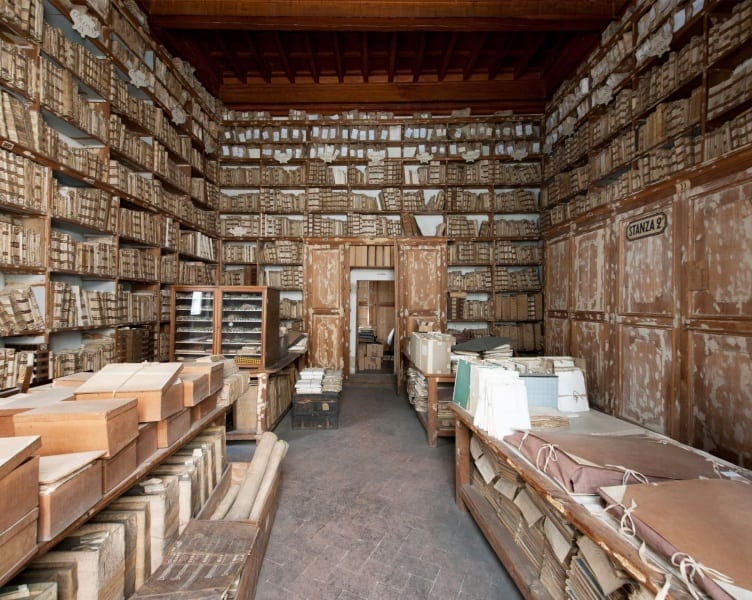
In addition to the mastery of master-masters and master craftsmen-restorers, we have an infinite number of paper material and documentation of ancient work in private libraries of historical families, in historical archives and museum vaults, a priceless and unique heritage still to be found value. We have the warehouses and libraries full as well as works, including precious documentation of books of construction sites of the great works of the past or the great workshops of painters and artisans. (See “State Archives of Venice” (3.) in which corridors are thousands of writings yet to be discovered and today still at risk of humidity).
Many master-craftsmen are still alive and fortunately many have already been able to transmit and teach to pass on their knowledge and experience to posterity.
The secrets of embalming and Egyptian petrification have been handed down to us through oral tradition. The literature writes that Segato (4.) took them to the grave but is not entirely true. They are secrets that are handed down verbally and jealously guarded and are not found in books. In a communication society, oral tradition is still very strong and important in this sector. Fortunately, the researchers’ research and computer technology are helping a lot to give strength and visibility to a whole range of information that would otherwise have remained in the dark.
In addition to the skills of men, the material used is also a predominant element in the recognition of the work quality of a restorer craftsman, and an element responsible for the change in the restoration technologies used in the last 60-70 years.
After the war, with the new materials of synthetic origin, the sector changed definitively and today we are facing an historical recovery of the original restoration “recipes”, difficult but possible.
Materials derived from petroleum are immediately ready and are much more readily available than natural materials. No special skill is needed, in their use. Using synthetic materials, a restoration or rehabilitation gives good results that are apparently good but don0t last as long as a restoration done with natural materials. We will see in the years to come, important works of art get damaged despite a precious and expensive restoration. As we see important modern works, in the process of decay because the cement is slowly crumbling.
Have you ever seen a fresco, a painting or a newly restored wooden choir and find it much less beautiful than before? Or see in the wall paintings the colors so bright and dishes that it was impossible to have thought them so in the 1300 or 1500 and above all impossible to get them so with egg yolk or cinnabar, as it was in the past. Even those who are not employed in the trade can recognize it.
This effect is given by polymers, round-shaped macromolecules that do not refract light, present in synthetic materials. I am not an expert restorer, but I have worked side by side with important restorers who do not use natural materials because they are “difficult” and because they contravene the rule that restoration should not be definitive. Synthetic products are usedtoday for cleaning and not only, also for the preparation of colors. This custom contravenes the logic: these materials did not exist when the goods were created and built. This theme has been creating passionate discussions for years.
A simple example so to better understand: up to 5 years ago there existed a myriad of natural restoration waxes and when a craftsman restorer went to buy a wax, he was asked what and for what. Today there are only 4 or 5 more. Each has its own specific use of which very few today are still known.
The restoration sector was revolutionized internationally after the flood of Florence in 1966, when it was found impotent in the face of unimaginable quantities of silt and mud on works of art and buildings, when Dino Dini (6.) introduced, among others, the use of ammonium carbonate and bicarbonate for cleaning that then made it possible to rescue it. This technique is still in use. Perhaps it would be the time to review this use, which in the opinion of many, continues its work of absorption of oils and waxes and natural materials, well beyond the end of the work with the risk of drying the surface.

Today we look for natural materials in bio-restoration. The queen of natural materials whose use is lost and mastery is lime. Now back in vogue because “… words like” Environmental sustainability “and” Conservation of Cultural Heritage “become central themes of the economic and political agendas of the most developed countries: lime is one of the possible solutions to these problems.” Rattazzi president of the Lime Forum) (5.). Unfortunately, a large quantity of organic products have been placed on the market, which are not organic. Difficult to orientate even for those in the trade. They call them the Organic-Smarts, 90% of the lime products are not lime, we find only a low percentage in the products, not enough.
The lime makes the walls breathe and lasts over time, does not crack, an unprofitable commercial logic. Yet many masons and patrons are still disoriented, often in search of real lime without finding it. In Italy we have little more than a dozen furnaces, marvelous family-run sites, which are struggling to survive: they are also a precious treasure that we should support.
Lime is difficult, you need to have experience, it is not enough to buy a bag and spread it. There are mixing times, thicknesses, drying times, each wall is different and the processing can not be homologated. Although it has been used for thousands of years all over the globe, we have lost its mastery.
The private and non-architectural cultural heritage should be obligatorily restored with plasters and lime paints, but this is not the case. I prefer not to go into political and economic reasons for which it is not.
The artisan restorer therefore, finds himself in a meander of certainties and confusions among which today it is difficult to extricate himself. He needs help, but a serious and concrete help.
A suggestion could be a hierarchy of both intervention teams and within them and form an “Order of Artisans” divided into categories, where members were selected by a suitable committee of experienced professors, restorers and restoration artisans in order to evaluate even the artisans who have not left the great Institutes. And maybe even give the guidelines to follow, for those who want to specialize and become part of it. The Order could also become a reference for those who vary from region to region and are not defined at national level.
Today the word “craftsman” is inflated as well as the word ORGANIC or the word GREEN, but the reality is quite different. We have a lot to do, the artisans need a serious help. They are a basin of history, culture, passion and love for beauty all over the world, not only in Italy, where we know we have a very high percentage of artistic and cultural works of the entire world, but in every corner of the globe. And they are alone, very alone. They force each other when they meet and recognize each other. Because without needing to speak they know what they have to face every day. Then, theyshare some strength from each other to go on for a few more months, waiting for something to change from up there in the power rooms of polytics
The numbers for action are there.
PricewaterhouseCoopers presented the report “The value of art: an economic-financial perspective” which shows a strong competitive gap in the economic return of Italian artistic and cultural heritage compared to other countries and a lack of ability on the part of the Italian system to develop the potential of our country. The analysis was illustrated in a conference organized by PwC in which there were institutional and private representatives.
According to the report, Italy has the largest cultural heritage in the world with over 3,400 museums, about 2,100 archaeological sites and parks and 43 UNESCO sites. Despite this absolute world record, the RAC, an index that analyzes the economic return of cultural assets on UNESCO sites, shows how the United States, with half the sites compared to Italy, have a commercial return of 16 sometimes the Italian one. The return of the cultural assets of France and the United Kingdom is between 4 and 7 times the Italian one. Given the wealth of Italian cultural heritage, compared to the foreign realities examined, enormous growth potentials that have not yet been exploited emerge.
The artisans are linked to our Heritage and are part of it, we have everything to give value to our future. Because in Italy, before selling everything to the Chinese, there will not be anything else.
“Those who work with their hands are a worker. Who works with his hands and his head is a craftsman. Who works with his hands and his head and his heart is an artist “. Saint Francis.
NOTE:
1. “The Battle of Anghiari”. Copy of Rubens of Leonardo’s lost work. June 29, 1603.
2. Henry Thomas Peters. An English cabinetmaker in Genoa. Ediz. Illustrated by Antonella Rathschüler published by Il Canneto, 2014
3. State Archives of Venice. Campo dei Frari.
4. Girolamo Segato: Sospirolo, 13 June 1792 – Florence, 3 February 1836) was an Italian cartographer, naturalist and Egyptologist.
5. The Forum Calce was born in 2007 in Bologna to give clarity on the materials on the market for plasters, marmoris and lime paints and to promote their use and information.

https://www.kermes-restauro.it/prodotto/kermes-n100/
.
[TheChamp-Sharing title=”Feel free to share this…”]
.
Pubblicato su Kermes: Tradizione artigiana e restauro

La vera vita degli artigiani-resturatori e le tecniche di restauro antiche: un patrimonio da mantenere e rivalutare.
Il numero 100 della rivista Kermes, rilanciata dal nuovo editore Lexis srl, pubblica, tra gli altri, questo mio articolo sugli artigiani. L’articolo è il risultato della preziosa volontà dell’editore di dare voce a questa importantissima categoria.
Ricordo una poesia sul sussidiario delle elementari in cui c’era un disegno delle mani sporche di un artigiano che non aveva che quelle, da offrire al Signore, alla sua morte. Mi colpì per sempre, rimanendo un riferimento che ancora mi sembra possa avere un suo senso, anche se oggi, sempre più spesso, gli artigiani sono in “camice bianco” e usano le sofisticate nuove tecnologie…si parla di “artigiani 4.0”.
L’amore per l’arte e la bellezza mi hanno condotta nel mondo del restauro dove ho incontrato gli artigiani coi quali lavoro tuttora. La mia è un’esperienza sul campo, a diretto contatto con loro, che rappresentano una grande parte della tradizione manifatturiera nazionale.
Abbiamo lavorato su beni meravigliosi, ho conosciuto uomini e donne pieni di passione di dedizione e di cultura, che facevano e fanno ancora fatica ad arrivare a fine mese. Ho conosciuto restauratori bravissimi, una doratrice eccezionale che rimase senza lavoro perché non bene inserita politicamente.
Sono vaccinata, ho imparato come va il mondo, ma credo che ogni singolo appassionato crei un popolo consapevole, quindi farò la mia parte per quanto posso.
Nel nostro paese, l’artigiano nel restauro è una figura storicamente importante, che occorre valorizzare. E’ una figura che ci rende, ancora oggi, conosciuti in tutto il mondo per la capacità di ridare vita ai grandi artisti e architetti del passato. Una figura che viene richiesta dai grandi magnati in tutto il mondo per la sua capacità di lavorare i materiali naturali coi quali riprodurre le grandi lavorazioni del passato. Il marmista con cui collaboro a Torino ha costruito i bagni di Vladimir Putin alla maniera degli antichi romani: questa capacità unica come la chiamiamo?

Chi è l’artigiano del restauro?
Ecco il primo grande scoglio, anzi una vera e propria diga nel settore.
Restauratore, artigiano del restauro, artigiano. Quali le differenze? Come valutare?
Il tema apre le porte ad un dibattito più politico che tecnico che lascio ad altre sedi, ma ne sono consapevole. Posso solo testimoniare cosa succede in realtà, nella quotidianità delle cartelle da pagare, dei committenti che non pagano o pagano a lungo termine, della difficoltà di essere compresi dagli architetti, della difficoltà di prendere un ragazzo che abbia voglia di imparare perché “ti costa troppo”, cassa edile contributi ecc. (anche se è stato re-introdotto il contratto di apprendistato che permette di assumere un ragazzo dai 15 ai 25 anni ma finalizzato all’ottenimento di un diploma. D.lgs. 81/2015 ).
Quanti artigiani eccelsi ho incontrato che hanno dovuto chiudere bottega perché non hanno trovato nessuno a cui tramandare il loro sapere, e non certo perché “i giovani non hanno più voglia di lavorare”. Loro stessi, avendo imparato il mestiere a 15 anni “a bottega” e a suon di scappellotti, sono diventati i migliori. Siamo responsabili di questa perdita di cultura che non potremo mai più recuperare. Gli artigiani soffrono, tutti, indistintamente, non ve lo diranno mai: sono orgogliosi, amano il loro lavoro più della loro vita, non lo cambierebbero mai.
In Italia, in particolare, abbiamo la possibilità di mettere mano sui più importanti manufatti e beni architettonici esistenti al mondo, dunque di perfezionare le lavorazioni e l’uso dei materiali come in nessun altro paese al mondo. Ho visto recuperare ricette e lavorazioni durante il restauro. Il vero artigiano restauratore “entra in simbiosi” con l’opera sulla quale interviene e si immerge in un profondo contatto artistico storico-analitico ed esecutivo non solo col manufatto, ma con chi lo ha costruito Durante l’analisi dell’opera e della sua storia, riesce a rilevare e ricostruire e quindi a rivivere i vari passaggi eseguiti e i materiali impiegati in fase di esecuzione, ed ecco che ri-conosce l’opera e la valorizza col restauro per riportarla al suo antico splendore. E non è solo questione di tecnica, è anche questione di anima.
Per alcuni, in assoluta buona fede, gli artigiani del restauro sono solo coloro che sono usciti dagli intensi anni di studio all’Istituto Centrale per il Restauro di Roma o all’Opificio delle Pietre Dure a Firenze o dalle altre scuole istituzionali e di eccellenza e come tali riconosciute dal Ministero.
Per gli altri, al di là della diga, il campo si allarga a tutti coloro che hanno imparato a bottega da un vecchio artigiano con anni di passione, di dedizione e di duro lavoro.
Dunque, forse, l’artigiano per il restauro non è solo quello che interviene sulla Battaglia di Anghiari (1.) e che applica diligentemente e con maestria ricette e tecniche imparate dai professori durante gli anni di studio, forse, è anche colui che ha imparato dal vecchio maestro di bottega le percentuali tramandate e usate da Michelangelo per ottenere il celeste della Cappella Sistina dal blu di lapislazzuli, e forse ha lo stesso diritto di essere considerato tale.
Ho incontrato alcuni giovani appassionati che, invece di fare l’Università, hanno scelto di andare dal vecchio fabbro del paese che gli ha insegnato come battere il ferro per fare i passanti alle inferriate o dal vecchio falegname che gli ha insegnato come tornire alla maniera di Henry Thomas Peters. (2.) Senza guadagnare nulla e, a volte, senza essere in regola, almeno per i primi tempi.

Oltre alle maestrie dei capi-mastri e dei maestri artigiani-restauratori, abbiamo un’infinità di materiale cartaceo e documentazione delle antiche lavorazioni nelle biblioteche private di famiglie storiche, negli archivi storici e nei caveau dei musei, un patrimonio inestimabile e unico tutto ancora da valorizzare. Abbiamo i magazzini e le biblioteche pieni oltre che di opere, anche di documentazione preziosissima di libri di cantiere delle grandi opere del passato o delle grandi botteghe di pittori e artigiani. (Vedi “Archivio di Stato di Venezia” (3.) nei quali corridoi si trovano migliaia di scritti ancora da scoprire e oggi ancora a rischio umidità).
Molti maestri-artigiani sono ancora vivi e molti per fortuna hanno già potuto trasmettere e insegnare per tramandare ai posteri le loro conoscenze ed esperienze.
I segreti dell’imbalsamazione e pietrificazione egizia ci sono stati tramandati fino ad ora attraverso la tradizione orale. La letteratura scrive che Segato (4.) se li sia portati nella tomba ma non è del tutto vero. Sono segreti che vengono tramandati verbalmente e custoditi gelosamente e non si trovano sui libri. In una società della comunicazione, la tradizione orale è ancora fortissima e importante in questo settore. Per fortuna, le pazienti ricerche degli studiosi e la tecnologia informatica, stanno aiutando moltissimo a dare forza e visibilità a tutta una serie di informazioni che sarebbero rimaste altrimenti al buio.
Oltre alle capacità degli uomini, anche il materiale che viene impiegato è elemento preponderante nel riconoscimento della qualità del lavoro di un artigiano restauratore, ed elemento responsabile del cambiamento nelle tecnologie di restauro utilizzate negli ultimi 60-70 anni.
Dal dopoguerra, con i nuovi materiali di origine sintetica, il settore cambia definitivamente e oggi ci troviamo di fronte ad un recupero storico delle “ricette” da restauro originarie, difficile, ma possibile.
I materiali di derivazione dal petrolio, sono già pronti e sono molto più facilmente reperibili dei materiali naturali. Non serve particolare maestria nel loro uso. Utilizzando i materiali sintetici un restauro o un risanamento dà buoni risultati apparenti ma non dura nel tempo quanto dura un restauro con materiali naturali. Vedremo negli anni a venire, importanti opere d’arte ammalorarsi nonostante un prezioso e costoso restauro. Così come vediamo importanti opere moderne, in fase di decadimento perché il cemento si sgretola lentamente.
Vi è mai capitato di vedere un affresco, un dipinto o un coro ligneo appena restaurato e trovarlo assai meno bello di prima? O di vedere nei dipinti murali dei colori così accesi e piatti che era impossibile li avessero pensati così nel 1300 o nel 1500 e soprattutto impossibile ottenerli così con il rosso d’uovo o con il cinabro. Anche chi non è addetto al mestiere lo sa riconoscere.
Questo effetto viene dato dai polimeri, macromolecole di forma tonda che non rifrangono la luce, presenti nei materiali sintetici. Non sono un’esperta restauratrice, ma ho lavorato gomito a gomito con importanti restauratori che non usano i materiali naturali perché “sono difficili” e perché contravvengono alla regola che il restauro debba essere non definitivo. Vengono usati prodotti sintetici per la pulizia e non solo, anche per la preparazione dei colori. Tale consuetudine contravviene alla logica: questi materiali non esistevano quando i beni sono stati creati e costruiti. E’un tema che crea, da anni, appassionate discussioni.
Un esempio semplice: fino a 5 anni fa esistevano una miriade di cere da restauro naturali e quando un restauratore artigiano andava a comprare una cera, gli veniva chiesto quale e per che cosa. Oggi ce ne sono solo più 4 o 5. Ciascuna aveva un suo uso ben specifico di cui pochissimi oggi sono ancora a conoscenza.
Il settore del restauro è stato rivoluzionato a livello internazionale dopo l’alluvione di Firenze nel 1966, quando ci si è trovati impotenti di fronte a quantità inimmaginabile di limo e fango sulle opere d’arte e sugli edifici, quando Dino Dini (6.) introdusse, tra gli altri, l’uso del carbonato e bicarbonato di ammonio per la pulizia che allora ne rese possibile il salvataggio. Tale tecnica è ancora in uso. Forse sarebbe giunto il momento di rivederne l’impiego, che ad avviso di tanti, continua la sua opera di assorbimento degli olii e cere e materiali naturali, ben oltre la fine dei lavori con il rischio di seccare la superficie.

Oggi si cercano materiali naturali nel bio-restauro. La regina dei materiali naturali di cui si è perso l’uso e la maestria, è la calce. Ora tornata in auge perché “…parole come “Sostenibilità ambientale” e “Conservazione del Patrimonio Culturale” diventano temi centrali delle agende economiche e politiche dei paesi più sviluppati: la calce si presenta come una delle possibili soluzioni a questi problemi.” “di Andrea Rattazzi presidente del Forum Calce) (5.). Purtroppo nel mercato sono stati immessi una gran quantità di prodotti bio, che proprio bio non sono. Difficile orientarsi anche per chi è del mestiere. Li chiamano i Bio-Furbi, il 90% dei prodotti a calce non sono calce, ne troviamo solo una bassa percentuale nella
La calce fa traspirare le pareti e dura nel tempo, non crepa, una logica commerciale poco redditizia. Eppure, tanti muratori e committenti sono ancora disorientati, spesso alla ricerca della calce vera senza trovarla. In Italia abbiamo poco più di una decina di fornaci, meravigliosi siti spesso a conduzione famigliare, che faticano a sopravvivere: sono anch’esse un tesoro preziosissimo che bisognerebbe supportare.
La calce è difficile, occorre avere esperienza, non basta acquistarne un sacco e stenderla. Ci sono i tempi di miscelazione, gli spessori, i tempi di asciugatura, ogni muro è diverso non si può omologarne la lavorazione. Nonostante sia stata utilizzata da migliaia di anni in tutto il globo, ne abbiamo perso la maestria.
I beni culturali architettonici privati e non, dovrebbero essere obbligatoriamente risanati con intonaci e tinte a calce ma non è così, preferisco non addentrarmi nelle ragioni politiche ed economiche per le quali non è così.
L’artigiano restauratore dunque, si trova in un meandro di certezze e confusioni tra le quali oggi è difficile districarsi. Ha bisogno di aiuto, ma di un aiuto serio e concreto.
Un suggerimento, potrebbe essere costituire una gerarchia sia delle squadre di intervento che al loro interno e formare un “Ordine degli Artigiani” suddivisi per categorie, dove i membri fossero selezionati da una commissione idonea di esperti professori, restauratori e artigiani del restauro per poter valutare anche gli artigiani che non siano usciti dai grandi Istituti. E forse anche dare le linee guida da seguire, per chi volesse specializzarsi ed entrare a farne parte. L’ Ordine potrebbe diventare anche un riferimento per i preziari che variano di regione in regione e non sono definiti a livello nazionale.
Oggi la parola “artigiano” è inflazionata così come la parola BIO o la parola GREEN, ma la realtà è tutta un’altra. Abbiamo tanto da fare, gli artigiani vanno aiutati moltissimo. Sono un bacino di storia, cultura, passione e amore per il bello in tutto il mondo, non solo in Italia dove sappiamo di avere un’altissima percentuale delle opere artistiche e culturali al mondo, ma in ogni angolo del globo. E sono soli, molto soli. Si fanno forza tra di loro quando si incontrano e si riconoscono. Perché senza bisogno di parlare sanno cosa devono affrontare ogni giorno senza bisogno di dirselo. Allora prendono un po’ di forza l’uno dall’altro per andare avanti ancora qualche mese aspettando che da lassù qualcosa cambi e ci si accorga seriamente di loro.
I numeri per agire ci sono.
PricewaterhouseCoopers ha presentato il rapporto “Il valore dell’arte: una prospettiva economico – finanziaria” da cui si evince un forte gap competitivo del ritorno economico del patrimonio artistico- culturale italiano rispetto agli altri paesi ed una scarsa capacità da parte del sistema Italia di sviluppare il potenziale del nostro paese. L’analisi è stata illustrata nell’ambito di un convegno organizzato da PwC in cui erano presenti rappresentanti istituzionali e privati.
L’Italia, si legge nel rapporto, possiede il più ampio patrimonio culturale a livello mondiale con oltre 3.400 musei, circa 2.100 aree e parchi archeologici e 43 siti Unesco. Nonostante questo dato di assoluto primato a livello mondiale, il RAC, un indice che analizza il ritorno economico degli asset culturali sui siti Unesco, mostra come gli Stati Uniti, con la metà dei siti rispetto all’Italia, hanno un ritorno commerciale pari a 16 volte quello italiano. Il ritorno degli asset culturali della Francia e del Regno unito è tra 4 e 7 volte quello italiano. A fronte della ricchezza del patrimonio culturale italiano, rispetto alle realtà estere esaminate, emergono enormi potenzialità di crescita non ancora valorizzate.
Gli artigiani sono legati al nostro Patrimonio e ne fanno parte, abbiamo tutto per poter dare valore al nostro futuro. Perché in Italia, prima di vendere tutto ai cinesi, non ci rimarrà niente altro.
“Chi lavora con le mani è un lavoratore. Chi lavora con le sue mani e la sua testa è un artigiano. Chi lavora con le sue mani e la sua testa ed il suo cuore è un artista”. San Francesco.
NOTE:
1. “lLa Battaglia di Anghiari”. Copia di Rubens dell’opera perduta di Leonardo. 29 giugno 1603.
2. Henry Thomas Peters. Un ebanista inglese a Genova. Ediz. Illustrata di Antonella Rathschüler edito da Il Canneto, 2014
3. Archivio di Stato di Venezia. Campo dei Frari.
4. Girolamo Segato: Sospirolo, 13 giugno 1792 – Firenze, 3 febbraio 1836) è stato un cartografo, naturalista ed egittologo italiano.
5. Il Forum Calce è nato nel 2007 a Bologna per dare chiarezza sui materiali presenti sul mercato per intonaci, marmorini e tinte a calce e per promuoverne l’uso e l’informazione.

https://www.kermes-restauro.it/prodotto/kermes-n100/
.
[TheChamp-Sharing title=”Sentiti libero di condividere questo…”]
.
Salone del Restauro of Florence

Also this year we will expose at the Salone del Restauro in Florence, to be held for the first time at Villa Adua, in the gardens of the Fortezza da Basso. Concurrently with the first edition of FLORENCE HERI -TECH: The Future of Heritage Science and Technologies that welcomes leading researchers and scholars from all over the world, setting the spotlight on the future and current topics of the industry on issues related to techniques and innovative technologies. Many more events and scheduled meetings (9:30am – 6:30pm), come visit us! We are also planning a very specia event … come and visit us!

.
[TheChamp-Sharing title=”Feel free to share this…”]
.
Salone del Restauro di Firenze
Anche quest’anno saremo presenti al Salone del Restauro di Firenze che si terrà per la prima volta a Villa Adua, nei giardini della Fortezza da Basso. In concomitanza con la la prima edizione di FLORENCE HERI-TECH : The Future of Heritage Science and Technologies che accoglie i maggiori ricercatori e studiosi da tutte le parti del mondo, mettendo sotto i riflettori i temi futuri e attuali del settore su questioni relative a tecniche e tecnologie innovative. Molti altri gli eventi e gli incontri previsti (9:30-18:30), venite a trovarci! Abbiamo in programma anche un evento…molto speciale, vi aspettiamo!
.
[TheChamp-Sharing title=”Sentiti libero di condividere questo…”]
.
Obbiettivi e Visione 2018
Diamo il benvenuto al nuovo anno con vigore e scintillanti bagliori. Prima di tutto, abbiamo un nuovo logo…

Non drammaticamente diverso, ma più in linea con le esigenze di dimensionamento del nostro nuovo sito Web SSL protetto …
https://AtelierDellaCalce.com/it/
o
Mentre siamo partiti in Italia con un nome di dominio .it, registrando .com e .eu, diamo un tocco di ambizioni più ampie. Stiamo espandendo…
Quest’anno ci vedrà aprire un ufficio nel Regno Unito. C’è richiesta per l’artigianato italiano. I proprietari più esigenti si stanno rendendo conto che la calce è il materiale migliore per il restauro degli edifici, soprattutto nei climi più umidi. I nostri sforzi in Inghilterra saranno sottolineati promuovendo l’Sublime Italian Artisans con lo slogan “SubLime Italian Artisans!”
https://SublimeItalianArtisans.com
o
Mentre non vediamo l’ora di attraversare le Bianche Scogliere di Calcare di Dover … non ci distraiamo dalle nostre ambizioni in Europa. Abbiamo quotato diversi progetti in Francia e in Italia, in particolare nel sud della Francia e a Torino. Inoltre, esiste un forte potenziale di lavoro definito nell’area di Cuneo, Toscana, Isola d’Elba e Venezia.
Sembra che la Germania si stia anche risvegliando ai benefici della calce. Esporremo a Denkmal 2018 a Lipsia, in Germania. La Camera di Commercio italo-tedesca ha riconosciuto l’opera di Sublime Italian Artisans estendendo un invito a rappresentare l’Italia in questa prestigiosa fiera europea.
Mostre a parte, c’è molto lavoro da fare sull campo. Abbiamo aumentato le dimensioni della nostra forza lavoro e acquisito i servizi di specialisti di restauro architettonico di alto livello. Adriano Spada ha oltre 50 anni di esperienza nella lavorazione di materiali da costruzione naturali. Dirige una squadra eccezionale di artigiani, esperti in intonaci a calce, pavimenti in pastellone e marmorini. Adriano ha perfezionato una tecnica di utilizzo della molassa e la preparazione della malta di calce. Siamo onorati che Adriano abbia selezionato Sublime Italian Artisans come primario collaboratore. I nostri clienti ne trarranno sicuramente beneficio!
Con più persone, locali più grandi e una visione più ampia, siamo fiduciosi che Sublime Italian Artisans si trovi in una buona posizione per fornire servizi di restauro specializzati eccellenti in Europa e oltre.
Per rendere ancora più emozionante il 2018, stiamo per lanciare ArtAcadia.org….

Questo è il nostro contributo costruttivo per aiutare a preservare il patrimonio artigianale in tutto il mondo. ArtAcadia è un’iniziativa di base per mettere gli artigiani su un piedistallo e promuovere le loro abilità a un pubblico più ampio. Usando la portata di Internet e il potere dei social media, daremo alle persone di tutto il mondo il potere di essere Ambasciatori del Patrimonio – Heritage Ambassadors.
Ufficialmente, il 2018 è l’Anno europeo del patrimonio culturale. Non possiamo pensare ad un momento migliore per l’Sublime Italian Artisans per scacciare piume adolescenziali e volare in alto. Ora è il momento per il mondo di riscoprire la calce. Puntiamo a essere in prima linea in questa rivoluzione del restauro. Al successo!

Carolina Reviglio della Veneria
[TheChamp-Sharing title=”Feel free to share this…”]
.
[TheChamp-Sharing title=”Sentiti libero di condividere questo…”]
.
Mission Statement 2018
We welcome the new year with vigour and flare. First of all, we have a new logo…
Not dramatically different, but more in line with the sizing needs of our new SSL secured website…
https://AtelierDellaCalce.com
o
While we started in Italy with a .it domain name, registering the .com and .eu, gives a hint of wider ambitions. We are expanding…
This year will see us opening an office in the United Kingdom. There is demand for Italian craftsmanship. Discerning property owners are realizing that lime is the better material for restoring buildings, especially in more damp climates. Our efforts in England will be underscored by promoting Sublime Italian Artisans with the tagline “SubLime Italian Artisans!”
https://SublimeItalianArtisans.com
o
While we are looking forward to crossing the Lime Cliffs of Dover… it does not distract from our ambitions in Europe. We have quoted several projects in France and Italy, specifically the South of France and Turin. Furthermore, there is strong potential of definite work in the Cuneo area, Tuscany, Elba and Venice.
It seems Germany is also awakening to the benefits of lime. We’re exhibiting at Denkmal 2018 in Leipzig, Germany. The Italian-German Chamber of Commerce has recognized the work of Sublime Italian Artisans by extending an invitation to represent Italy at this prestigious European trade show.
Exhibitions aside, there is a lot of work to do in the field. We have increased the size of our workforce and acquired the services of very senior architectural restoration specialists. Adriano Spada has over 50 years experience working with natural building materials. He directs an exceptional team of craftsmen, skilled in lime plastering, pastellone floors, and marmorini. Adriano has perfected a technique of using molasses and prepare the lime mortar. We are honoured that Adriano has selected Sublime Italian Artisans as primary collaborator. Our clients will certainly benefit!
With more people, larger premises and a broader vision, we feel confident that Sublime Italian Artisans is well placed to provide excellent specialized restoration services in Europe and beyond.
To make 2018 even more exciting, we are just about to launch ArtAcadia.org….

This is our constructive contribution to help preserve artisanal heritage around the world. ArtAcadia is a grassroots initiative to put artisans on a pedestal and promote their skills to a wider audience. Using the reach of the Internet and power of social media, we will be empowering people all over the world to be Heritage Ambassadors.
Officially, 2018 is the European Year of Cultural Heritage. We cannot think of a better time for Sublime Italian Artisans to cast off adolescent feathers and fly high. Now is the time for the world to rediscover lime. We aim to be at the forefront of that restoration revolution. To success!
Carolina Reviglio della Veneria
[TheChamp-Sharing title=”Feel free to share this…”]
.
[TheChamp-Sharing title=”Feel free to share this…”]
.


Connect on social media…


Connetti sui social…